
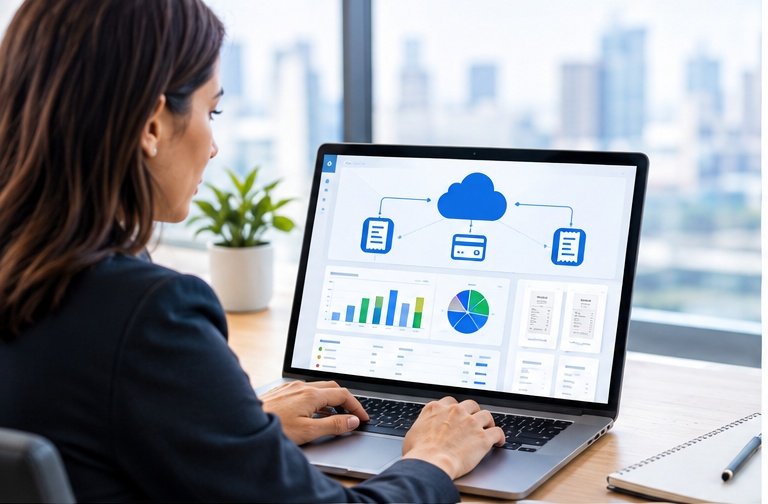
Why Cloud-Based Expense Software Is Becoming Essential for Growing UK and US Companies
Running a growing business is exciting, but growth also brings new challenges. More employees mean more purchases, more receipts, more reimbursements, and more financial information to manage. What may have worked for a small team can quickly become inefficient when a company expands across departments, offices, or even countries.
This is where Expense Software is becoming increasingly important for businesses in both the UK and US. Instead of relying on spreadsheets, paper receipts, emails, and manual data entry, companies can use cloud-based systems to bring expense management into one organised digital environment.
For finance teams, this can mean less administrative work. For employees, it can mean faster expense submissions and reimbursements. For business leaders, it can provide greater visibility into where company money is being spent.
As companies continue to embrace digital transformation, Expense Software is moving from being a convenient financial tool to an important part of modern business operations.
The Problem With Traditional Expense Management
For many businesses, expense reporting still involves a familiar routine. An employee makes a purchase, keeps the receipt, fills out a spreadsheet or form, sends it to a manager, and waits for approval.
That process might seem manageable when there are only a handful of employees. However, as the business grows, the number of transactions can increase dramatically.
A finance department may have to review hundreds or thousands of individual expenses every month. Receipts can be misplaced, figures can be entered incorrectly, and approval emails can get buried in crowded inboxes.
Traditional processes can also make it difficult to understand spending in real time.
Modern Expense Software addresses many of these challenges by digitising the entire expense process. Employees can submit expenses electronically, managers can review them online, and finance teams can maintain a clearer record of business spending.
Why Cloud-Based Expense Software Is Different
One of the biggest advantages of cloud technology is accessibility. A cloud-based Expense Software platform does not require finance teams to rely on files stored on a particular office computer.
Employees can usually access the system through a browser or mobile device, making it easier to submit expenses while travelling, working remotely, or visiting customers.
This flexibility is particularly useful for modern UK and US businesses that operate with hybrid and distributed teams.
Instead of waiting until an employee returns to the office with a folder of receipts, expenses can be recorded much closer to the time they occur.
Cloud-based systems can also provide a central source of information. Rather than having expense data scattered across spreadsheets, emails, and accounting files, businesses can manage it through a connected platform.
Expense Software Saves Valuable Time
Time is one of the most valuable resources for any growing company.
Finance professionals should be spending their time analysing financial information, supporting business decisions, and improving processes rather than repeatedly typing information from receipts into spreadsheets.
Expense Software can automate many repetitive tasks associated with expense reporting.
For example, employees may be able to upload receipts directly from their phones. Digital systems can capture relevant information and organise transactions, reducing the amount of manual work required from finance teams.
Approval workflows can also be automated. Instead of manually forwarding every expense to the appropriate manager, the system can route submissions according to predefined rules.
This does not eliminate the need for human oversight. Instead, Expense Software helps employees focus their attention where it is most valuable.
Better Accuracy and Fewer Manual Errors
Manual data entry creates another challenge: human error.
A misplaced decimal point, incorrect date, duplicated transaction, or incorrectly categorised expense can create problems later. Even small errors can become time-consuming when finance teams have to investigate and correct them.
Digital Expense Software can reduce opportunities for these mistakes by standardising how expenses are submitted and processed.
Businesses can establish categories, spending policies, approval rules, and required information so that employees follow a consistent process.
Automated checks may also identify transactions that require further attention.
For growing companies, this consistency can make financial administration easier to manage. Instead of relying entirely on individual employees to remember every reporting requirement, the system can provide structure throughout the process.
Greater Visibility Into Business Spending
Business leaders need to know where money is going.
A company may have expenses covering travel, software subscriptions, meals, equipment, advertising, transportation, accommodation, and professional services. When this information is spread across different spreadsheets, understanding overall spending becomes difficult.
Expense Software can bring these transactions together so finance teams can examine spending patterns more efficiently.
This visibility can help businesses identify recurring costs, unusual transactions, spending trends, and areas that may require closer attention.
For example, a company might discover that several departments are purchasing similar software subscriptions independently. With better visibility, management can investigate whether consolidating those subscriptions makes financial sense.
The important point is that better information supports better business discussions.
Expense Software Supports Growing Teams
Growth can make expense management more complicated because employees often have different responsibilities and spending requirements.
A salesperson travelling to meet customers may have completely different expenses from a software developer working remotely. A senior manager may have different approval requirements from a junior employee.
Expense Software can help businesses create structured workflows that accommodate these differences.
Companies can establish spending policies, approval levels, expense categories, and reporting requirements based on their organisational structure.
This becomes particularly useful as businesses move from a small-team environment into a more formal operation.
Instead of creating a new manual process every time the company adds employees, the digital system can provide a scalable foundation.
Useful for UK and US Businesses
Businesses in the UK and US operate in different regulatory and financial environments, but many face similar operational challenges.
Employees in both markets may travel for work, purchase equipment, use company cards, attend conferences, or pay for services on behalf of their employers.
A modern Expense Software solution can help businesses organise these transactions while supporting their internal financial policies.
For companies operating across both countries, centralised expense management can also make it easier to maintain consistent internal processes while allowing finance teams to account for regional differences.
Currency considerations are another practical issue for international companies. Employees travelling between the UK, US, and other markets may submit expenses in different currencies. A digital system can make the underlying records easier to organise and review.
Expense Software Makes Remote Work Easier
Remote and hybrid working have changed how companies operate.
Employees are no longer necessarily sitting in the same office as the finance team. Waiting for paper receipts or physical forms to move between locations can create unnecessary delays.
Cloud-based Expense Software allows employees to submit expenses digitally regardless of where they are working.
This can be especially useful for businesses with employees spread across multiple cities, states, or regions.
A remote employee can submit a receipt from home. A travelling employee can record a purchase from a hotel or airport. A manager can review an approval request without being physically present in the office.
The result is a more flexible expense process that fits modern working practices.
Stronger Financial Controls
Convenience is important, but businesses also need control.
Companies need policies that define what employees can purchase, how much they can spend, and which expenses require approval.
Expense Software can help turn these policies into structured workflows.
For example, a company might require additional approval for expenses above a particular threshold. Another organisation may restrict certain categories of spending or require receipts for specific purchases.
When these rules are incorporated into a digital workflow, finance teams have a clearer framework for reviewing transactions.
This can help businesses maintain consistency as they grow and reduce reliance on informal processes.
Easier Reporting and Record Keeping
Financial reporting becomes increasingly demanding as a company becomes larger.
Finance teams need reliable information for internal reporting, budgeting, forecasting, reconciliation, and financial reviews.
Expense Software can make it easier to organise expense information and generate reports based on available transaction data.
Instead of spending hours collecting information from multiple spreadsheets, finance professionals can work from a centralised system.
This can also make historical information easier to review when a business needs to investigate previous spending or prepare financial documentation.
Better organisation does not replace professional financial oversight, but it can make that oversight more efficient.
Integrating Expense Software With Other Business Systems
Modern businesses rarely operate using one system.
They may use accounting platforms, payroll software, banking services, enterprise resource planning systems, customer relationship management platforms, and other cloud applications.
The value of Expense Software can increase when it works alongside these systems.
Integration can reduce duplicate data entry and help information move between financial processes more efficiently.
For example, approved expenses may be transferred into an accounting workflow rather than being manually entered again by a finance employee.
The exact capabilities depend on the platform a business selects, but integration is an important consideration for companies planning for long-term growth.
What Businesses Should Look for in Expense Software
Not every company has the same requirements, so businesses should evaluate software based on their specific needs.
A growing organisation may want to consider:
- Mobile expense submission
- Receipt capture
- Automated approval workflows
- Custom spending policies
- Accounting integrations
- Multi-currency support
- Reporting and analytics
- User permissions
- Audit trails
- Cloud accessibility
- Data security
- Scalability
Ease of use also matters.
If employees find an Expense Software platform confusing, they may continue using spreadsheets, emails, or other unofficial processes. A straightforward interface can therefore be just as important as a long list of technical features.
Businesses should also consider how the platform will handle growth. The system that works for 20 employees should ideally have a clear path for supporting 100, 500, or more employees.
The Future of Expense Management
The move toward digital financial management is unlikely to slow down.
Artificial intelligence, automation, mobile technology, integrations, and real-time reporting are changing the way companies handle financial administration.
Future Expense Software solutions are likely to place even greater emphasis on automation and intelligent analysis.
Instead of simply recording transactions, systems can increasingly help businesses identify patterns, flag unusual activity, organise financial information, and provide more useful insights.
However, technology should support people rather than make financial management unnecessarily complicated.
The goal is simple: make everyday expense processes easier, faster, more transparent, and more manageable.
Final Thoughts
For growing UK and US companies, managing expenses efficiently is no longer just an administrative concern. It can influence productivity, financial visibility, internal controls, and the overall employee experience.
Cloud-based Expense Software offers businesses a practical way to move away from paper receipts, scattered spreadsheets, and manual approval processes.
By automating repetitive tasks, improving access to information, supporting remote teams, and creating more consistent workflows, the right solution can become an important part of a company’s financial infrastructure.
As businesses continue to grow and adopt digital-first working practices, Expense Software will increasingly become part of the standard toolkit used by modern finance teams.
The companies that approach expense management as a scalable business process, rather than a collection of manual tasks, can build a stronger foundation for sustainable growth.
editor's pick
latest video

news via inbox
Nulla turp dis cursus. Integer liberos euismod pretium faucibua