
Top Cybersecurity Certifications for US and UK SOC Analysts and Security Professionals
Cybersecurity has become one of the most important areas of modern technology. As businesses move more operations online, they also face increasingly sophisticated cyber threats. From phishing and ransomware to credential theft and network attacks, organisations need skilled professionals who can identify threats, investigate suspicious activity, and protect critical systems.
For people looking to enter or advance in security operations, Cybersecurity Certifications can provide a structured way to develop technical knowledge and demonstrate professional skills. Certifications can be particularly useful for aspiring SOC analysts, blue team professionals, incident responders, and other defensive security specialists in the US and UK.
However, choosing the right certification is not always easy. There are dozens of options covering networking, security fundamentals, threat detection, incident response, cloud security, and advanced security management. The right choice depends on your current experience, career goals, and the type of security role you want to pursue.
In this guide, we explore some of the most relevant Cybersecurity Certifications for US and UK SOC analysts and security professionals and explain what each certification can bring to your career.
Why Cybersecurity Certifications Matter for SOC Analysts
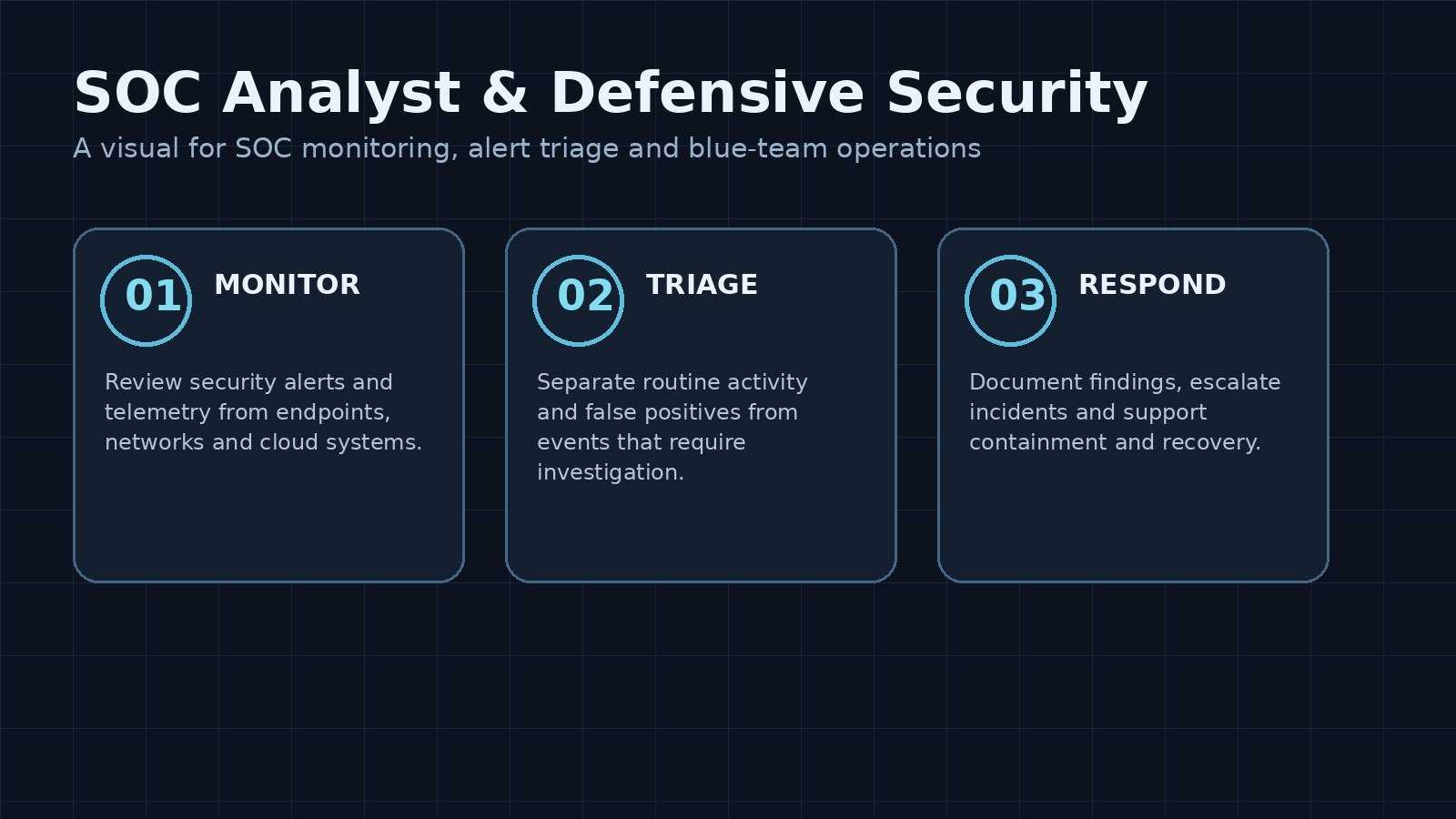
A Security Operations Centre (SOC) is responsible for monitoring systems, investigating security alerts, detecting threats, and helping organisations respond to incidents. SOC analysts often work with security information and event management (SIEM) platforms, endpoint detection tools, network monitoring systems, vulnerability scanners, and threat intelligence.
Practical experience is extremely valuable, but Cybersecurity Certifications can help candidates build a foundation in these areas.
For newcomers, certifications can provide a clear learning path. For experienced professionals, they can help validate existing knowledge or support a move into a specialised security role.
In both the US and UK, employers may look for a combination of technical skills, practical experience, education, and recognised certifications. A certification alone does not guarantee employment, but it can strengthen a candidate’s overall professional profile.
1. CompTIA Security+
CompTIA Security+ is one of the most widely recognised entry-level security certifications. It covers core concepts including threats, vulnerabilities, security architecture, identity management, cryptography, risk management, and incident response.
For someone beginning a SOC career, Security+ can provide a useful foundation before moving towards more specialised training.
It is particularly relevant to candidates who already understand basic networking and computing concepts but want to build dedicated cybersecurity knowledge.
Among entry-level Cybersecurity Certifications, Security+ is often considered a practical starting point because its content covers many of the fundamental concepts used across defensive security roles.
2. CompTIA CySA+
CompTIA CySA+ is designed with cybersecurity analysis in mind and is particularly relevant to SOC and blue team careers. Its focus includes security monitoring, vulnerability management, threat detection, incident response, and analysing security data.
These skills closely relate to the everyday responsibilities of many SOC analysts.
For professionals who already understand basic security principles, CySA+ can provide a more focused learning path towards defensive security. It can also help learners understand how security teams identify abnormal behaviour and respond to potential threats.
For candidates comparing Cybersecurity Certifications, CySA+ is worth considering when the goal is specifically security analysis rather than general IT security knowledge.
3. GIAC Security Essentials (GSEC)
The GIAC Security Essentials certification is focused on practical security knowledge. It covers areas such as network security, access control, incident handling, cryptography, and security operations.
GSEC can be useful for professionals who want to demonstrate a deeper understanding of hands-on security concepts.
GIAC certifications are also known for their technical focus, making them relevant to professionals who want to develop practical defensive security capabilities.
The certification can be more appropriate for candidates who already have some IT or security experience and want to demonstrate a stronger technical foundation.
4. GIAC Certified Incident Handler (GCIH)
Incident response is a critical part of defensive cybersecurity. When an organisation detects a security incident, professionals must investigate what happened, identify affected systems, contain the threat, and support recovery.
The GIAC Certified Incident Handler certification focuses on incident handling and related defensive techniques.
For SOC analysts who want to move towards incident response, this certification can provide useful knowledge about handling attacks and investigating security events.
Among advanced Cybersecurity Certifications, GCIH is particularly relevant to professionals who want to build incident-handling skills.
5. Certified Ethical Hacker (CEH)
Although CEH focuses heavily on ethical hacking and offensive security concepts, it can also be valuable for defensive professionals.
Understanding how attackers discover vulnerabilities and exploit weaknesses can help SOC analysts recognise suspicious activity. Knowledge of common attack methods can improve a defender’s ability to interpret security alerts and understand potential attack paths.
For this reason, CEH may be useful for professionals who want to understand both offensive and defensive perspectives.
However, candidates primarily interested in SOC work should also develop practical skills in monitoring, detection, incident response, and security analysis rather than relying on an offensive certification alone.
6. CISSP
The Certified Information Systems Security Professional (CISSP) is an advanced certification covering a broad range of cybersecurity and information security topics.
Its domains include security and risk management, asset security, security architecture, communications security, identity and access management, security assessment, security operations, and software development security.
CISSP is generally more suitable for experienced security professionals than beginners. It can be relevant to professionals moving towards senior, managerial, architectural, or security leadership positions.
For experienced professionals evaluating Cybersecurity Certifications, CISSP can demonstrate broad knowledge across the information security discipline.
7. Microsoft Security Certifications
Microsoft technologies are widely used by organisations, making Microsoft-focused security certifications relevant to many security professionals.
Microsoft offers certifications covering areas such as security operations, identity, Azure security, and security administration. These can be particularly useful for professionals working in environments that rely heavily on Microsoft cloud and enterprise technologies.
For SOC analysts, cloud security knowledge is increasingly important because security monitoring now extends beyond traditional on-premises infrastructure.
Adding Microsoft-focused credentials to a broader set of Cybersecurity Certifications can therefore help professionals develop skills relevant to modern enterprise environments.
8. AWS Security Certification
Amazon Web Services is widely used across businesses and technology organisations. As more infrastructure moves into the cloud, security professionals need to understand cloud-specific risks and controls.
AWS security training and certification can help professionals develop knowledge of identity management, data protection, monitoring, logging, and secure cloud architecture within AWS environments.
For SOC analysts working with cloud infrastructure, understanding how cloud services generate logs and security events can be extremely valuable.
Cloud-focused Cybersecurity Certifications can complement traditional security credentials by adding knowledge of modern infrastructure environments.
9. Blue Team Level 1
Blue Team Level 1 is designed around practical defensive security skills. It focuses on areas such as security monitoring, digital forensics, threat intelligence, and incident response.
This type of hands-on learning can be particularly useful for people who want to understand what defensive security work looks like beyond theoretical concepts.
For aspiring SOC analysts, practical exercises can help bridge the gap between studying security concepts and applying them to realistic scenarios.
When selecting Cybersecurity Certifications, candidates should consider whether a programme provides practical activities in addition to theoretical learning.
10. Splunk Certifications
SIEM platforms are central to many SOC environments because they allow security teams to collect, search, correlate, and analyse large amounts of security data.
Splunk certifications can be useful for professionals working with Splunk-based security monitoring environments. Learning how to search logs and investigate events can support day-to-day SOC activities.
While a platform-specific certification should not replace broader security knowledge, it can be a valuable addition for candidates targeting roles where that technology is commonly used.
Choosing the Right Cybersecurity Certification
There is no single certification that is suitable for every security professional. Your choice should depend on your current experience and career direction.
If you are new to cybersecurity, starting with fundamental networking and security knowledge may be sensible. Entry-level Cybersecurity Certifications can help establish the foundations required for more advanced study.
If you already have IT experience, you might consider a security-analysis certification that focuses more directly on SOC activities.
Professionals with several years of experience may benefit from advanced certifications covering incident response, cloud security, architecture, governance, or security leadership.
It is also important to consider the technology used by employers in your target market. A certification that aligns with commonly used tools and platforms can complement practical experience.
US vs UK Cybersecurity Career Considerations
The basic technical skills required for SOC roles are broadly similar across the US and UK. Analysts in both markets may work with SIEM platforms, endpoint security tools, identity systems, vulnerability scanners, and threat intelligence.
However, employers can have different job requirements, preferred technologies, and professional expectations.
In the UK, candidates may encounter organisations that place strong emphasis on recognised professional frameworks and security standards. In the US, employers may similarly value recognised credentials while also placing significant emphasis on hands-on technical experience.
Rather than choosing Cybersecurity Certifications simply because they are popular, candidates should examine actual job descriptions for the roles they want. Look for recurring requirements such as SIEM experience, cloud security knowledge, networking, incident response, scripting, or specific security platforms.
Certifications Are Only One Part of the Journey
A certification can demonstrate that you have studied a particular area, but cybersecurity employers often want evidence that you can apply your knowledge.
Aspiring SOC analysts should therefore combine certification study with practical learning.
Building a home lab, analysing sample logs, learning basic scripting, practising network analysis, and working through security scenarios can make theoretical knowledge much more useful.
Communication skills also matter. SOC analysts need to document investigations, communicate findings, escalate incidents, and explain technical information to colleagues.
The strongest approach is usually to combine Cybersecurity Certifications with practical projects and relevant experience.
Final Thoughts
Cybersecurity remains a rapidly developing field, and SOC analysts play an important role in helping organisations identify and respond to threats.
The right certification can provide structure, strengthen technical knowledge, and demonstrate commitment to a cybersecurity career. Options such as Security+, CySA+, GSEC, GCIH, CISSP, cloud security certifications, and platform-focused credentials can serve different career stages and goals.
Before choosing among Cybersecurity Certifications, consider your current skills, target job title, preferred technology environment, experience level, and long-term career plans.
Most importantly, remember that certification is a starting point rather than the destination. Combine recognised credentials with practical labs, continuous learning, communication skills, and real-world security experience. That combination can help you build a stronger foundation for a long-term career in SOC operations and defensive cybersecurity.
editor's pick
latest video

news via inbox
Nulla turp dis cursus. Integer liberos euismod pretium faucibua